

Evaporation King ●
Casa San Matías — Los Altos de Jalisco, Mexico ● Gladiator Installation ● Tequila Vinasse Evaporation ● 7 Min Read
Wastewater Solved.™
For every liter of tequila produced, distilleries generate up to ten liters of vinasse — one of the most chemically aggressive industrial wastewaters in agribusiness. Casa San Matías, one of Mexico’s oldest and most respected tequila houses, chose to solve it. A Gladiator is now evaporating treated tequila vinasse at their facility in the highlands of Jalisco. Here’s why that matters.
The House: Casa San Matías, 139 Years of Tequila in Los Altos de Jalisco
There are old tequila houses, and then there is Casa San Matías.
Founded in 1886 by Don Delfino González in the red volcanic highlands of Jalisco — Los Altos — the distillery has been producing tequila for nearly 140 years across three generations of the same family. The brands include San Matías Blanco, Pueblo Viejo (one of the top-selling tequila brands in the Mexican domestic market), Rey Sol, and the artisanal small-batch San Matías Tahona — produced using the same basalt tahona stone the distillery has used since 1886.
At this scale, in this tradition, quality is non-negotiable. But so is what happens after distillation ends.
The Problem: What Tequila Leaves Behind
Vinasse is the liquid waste stream left over after agave juice has been fermented and distilled. For every liter of finished tequila, a distillery generates 8 to 12 liters of vinasse — a dark, acidic, high-strength effluent with chemical oxygen demand (COD) concentrations that can exceed 74,000 mg/L. By comparison, typical domestic sewage runs around 300–600 mg/L COD. Tequila vinasse is not comparable to anything in the municipal wastewater world.
The color alone tells the story: vinasse runs dark brown to black, carrying concentrated organic load, acids, potassium, and compounds from the agave plant that make it acutely toxic to aquatic ecosystems when discharged untreated.
A Crisis the Industry Has Known About for Decades
The environmental impact of tequila vinasse is well documented and has resulted in significant ecological damage in Jalisco. One widely reported incident in 2021 saw a vinasse lagoon rupture and discharge into a river feeding the San Onofre reservoir in Ayotlan, Jalisco — killing tens of thousands of fish and devastating the livelihood of local fishermen. Researchers at the University of Guadalajara have monitored streams near tequila factories in the Valles region and confirmed active use of rivers as vinasse disposal sites.
The math is not subtle. Total tequila production in Mexico runs into the hundreds of millions of liters annually — meaning total vinasse generation is measured in the billions of liters per year. Without treatment, that is, as one study framed it, the pollution equivalent of millions of people’s domestic sewage discharged to the environment untreated. Every year.
Large producers like Casa Sauza have invested in full treatment infrastructure that processes hundreds of thousands of liters of wastewater daily. But even with treatment, the final volume reduction challenge remains: what do you do with the treated effluent when there is nowhere compliant for it to go?
That is the problem Evaporation King was called in to solve at Casa San Matías.
The Application: Evaporating Treated Tequila Vinasse
The key word in this installation is treated. Casa San Matías already has biological treatment infrastructure in place — the Gladiator is the final stage in the chain, handling the residual volume after biological treatment has reduced the organic load to manageable levels.
This is an increasingly common pattern in industrial wastewater management: biological treatment plus accelerated evaporation for true zero liquid discharge. Treatment alone reduces toxicity and COD — but it doesn’t eliminate volume. Evaporation eliminates volume.
The Treatment Partner: BioDAF Water Technologies
The biological treatment system feeding this installation was upgraded by BioDAF Water Technologies (mx.biodaf.com), Evaporation King’s Mexico partner and one of the leading industrial wastewater firms in Latin America. Casa San Matías already had a biological treatment system in place — BioDAF came in to assess what existed, identify the gaps, and bring it up to the performance standard required for the full zero-discharge solution to work. Based in Guadalajara — the heart of tequila country — BioDAF brings more than 25 years of experience engineering and retrofitting custom treatment systems for some of the most demanding industrial streams in Mexico, including petrochemical, pharmaceutical, food processing, and specifically the tequila industry’s vinasse challenge.
Their approach is to build around what’s already there wherever possible, engineering the upgrade to fit the existing infrastructure rather than starting from scratch. At Casa San Matías, that upgraded biological treatment train now reduces the raw vinasse load to the level where the Gladiator can take it the rest of the way to zero. BioDAF’s treatment upgrade upstream, Evaporation King’s volume elimination downstream — the complete solution. Wastewater Solved.™
Why Vinasse Is a Demanding Evaporation Target
Even after biological treatment, tequila vinasse effluent carries characteristics that challenge conventional spray evaporation equipment:
High dissolved solids and conductivity. The mineral load from agave processing — particularly potassium — means elevated TDS in the treated stream. Equipment not designed for this will corrode, clog, and fail.
Residual organics and color. Biological treatment removes the bulk of organic load, but the effluent is not clean water. Residual compounds can foul pressurized nozzle systems over time.
Warm climate with seasonal humidity variation. Jalisco’s highland climate offers favorable evaporation conditions through much of the year, but humidity during the rainy season (June through October) compresses the effective evaporation window and demands equipment that can maximize output when conditions allow.
High operational priority. Tequila production doesn’t stop. Vinasse generation is continuous. The evaporation system needs to run reliably, with minimal operator intervention, as part of a working industrial facility.
The Gladiator’s rotary atomizer design handles all of this. No pressurized orifices to clog. No pressure systems that degrade in high-TDS conditions. No moving parts exposed to the chemical environment of the evaporated stream. 300,000 TDS tolerance built in from the start.
The Solution: Gladiator at Casa San Matías
Watch the installation. The system goes in at a working tequila facility — surrounded by the production infrastructure of one of Mexico’s most storied distilleries — and begins reducing the treated vinasse volume through continuous accelerated evaporation.
Watch the Casa San Matías Installation Video →
What the Gladiator 120 Brings to This Application
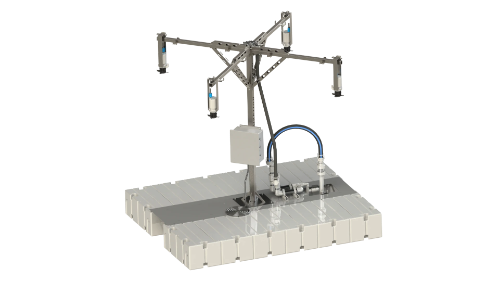
Rotary atomization. The atomizer spins the liquid into a fine mist without pressurized orifices. In a high-TDS, post-biological-treatment stream, this is the difference between a system that runs continuously and one that requires constant service.
300,000 TDS tolerance. Built to handle concentrated industrial streams — not designed down to potable water standards and pressed into service.
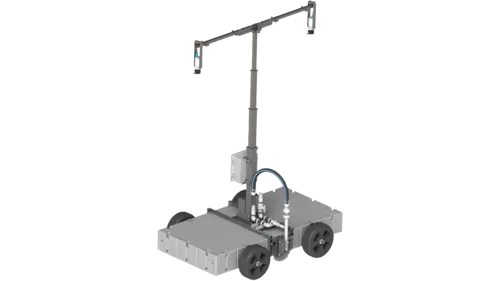
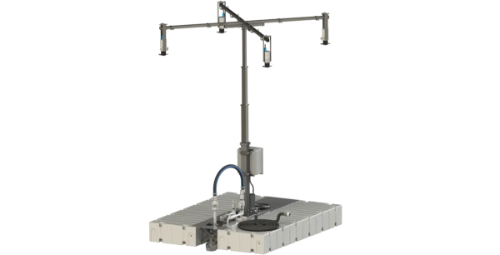
Fixed mast height (7 ft). Allows plume optimization for the specific pond geometry and prevailing airflow patterns at the Jalisco highlands site.
WDC (Weather Droplet Control). Auto-modulates based on wind speed and direction. In a working production facility, controlled atomization isn’t optional — overspray onto production areas, agave fields, or neighboring properties is not acceptable.
Low maintenance, high uptime. Distillery operations staff are production-focused, not wastewater engineers. A system that requires minimal intervention and runs autonomously is the right fit for this environment.
Why This Installation Matters Beyond One Distillery
The tequila industry produces somewhere in the range of 10 liters of vinasse for every liter of finished spirit. Mexico’s tequila production is measured in hundreds of millions of liters annually. The math of that ratio means the industry as a whole is generating wastewater volumes that dwarf almost any other agri-industrial sector in Latin America.
Treatment infrastructure is improving — but the final volume reduction step has been the persistent weak link. Evaporation offers something that biological treatment alone cannot: true volume elimination. No treated effluent to dispose of. No discharge to manage. No compliance risk from final stream handling.
Casa San Matías, with 139 years of operations and a reputation built on craft and quality, is setting a standard for what responsible production looks like in the modern tequila industry. Adding a Gladiator to the back end of their treatment chain is not a regulatory minimum — it is a genuine commitment to closing the loop on the distillery’s water footprint.
The Results: What Accelerated Evaporation Delivers at a Tequila Factory
True Zero Liquid Discharge on the Final Effluent Stream
Treated vinasse volume is eliminated through evaporation — no discharge to rivers, reservoirs, or land. The effluent that came out of treatment goes nowhere but up.
Continuous, Autonomous Operation
Production runs year-round. The Gladiator runs with it. Automated controls, WDC auto-shutoff, and a design built around minimal maintenance mean the system keeps pace with production without adding operational burden.
Corrosion-Resistant in a Demanding Chemical Environment
Where pressurized spray systems corrode and clog against the chemistry of post-treatment vinasse, the Gladiator’s rotary atomizer runs clean. No orifices. No pressure system. No single point of failure chasing downtime.
Protecting the Watershed That Made the Tequila Possible
Los Altos de Jalisco produces exceptional tequila because of its soil, its elevation, and its water. The distilleries that protect that water supply are protecting the very conditions that make their product what it is. That’s not compliance — it’s self-interest aligned with environmental stewardship.
Operators Managing High-Strength Agri-Industrial Wastewater: We’ve Done This Before.
Tequila vinasse isn’t the only high-COD, high-TDS agri-industrial stream that ends up on an evaporation pond with nowhere else to go. Distillery waste, food processing effluent, brewery wastewater, agricultural drainage — the pattern is consistent. Biological treatment takes the load down. Evaporation takes the volume to zero.
If your facility has a treated effluent stream with no compliant disposal path, the Gladiator is the answer.
Watch the Full Casa San Matías Installation Video →
(720) 263-2517