
Evaporation King ● Bryce Canyon National Park — Garfield County, Utah ● Gladiator Installation ● 7 Min Read
Wastewater Solved.™
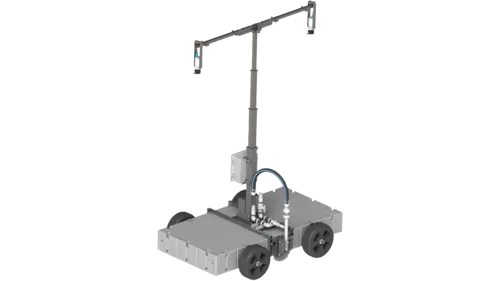
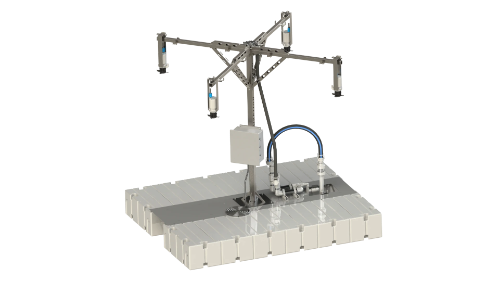
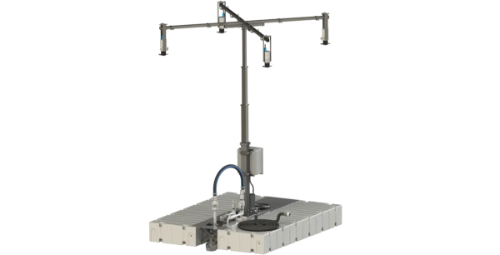
A Gladiator 120 evaporation system deployed inside one of America’s most iconic national parks — where environmental compliance isn’t just policy, it’s the entire mission. Zero discharge. Zero compromise. Right in the backyard of 2.5 million annual visitors.
When you think of Bryce Canyon National Park, you think of the hoodoos: those flaming orange and crimson rock spires rising from the Paunsaugunt Plateau in southwestern Utah. You think of one of the most protected, most scrutinized, most visited landscapes in the American West. You probably don’t think about wastewater management.
But behind every world-class visitor experience is infrastructure — and behind that infrastructure is water. Lots of it. And when that water needs to go somewhere in a place where discharge to land or groundwater is simply not an option, you call Evaporation King. Wastewater Solved.™
The Setting: Why Bryce Canyon Is One of the Most Demanding Environments in the Country
Bryce Canyon sits at an elevation of roughly 8,000 feet in Garfield County, Utah — one of the most remote and environmentally sensitive corners of the American West. The park hosts nearly 2.5 million visitors annually, all of whom generate the full range of infrastructure demands: lodging, dining, visitor centers, maintenance facilities, and the wastewater that comes with all of it.
This isn’t a municipal environment where you can tap a sewer line or expand a lagoon. The National Park Service operates under some of the most stringent environmental oversight in the country. Groundwater protection is paramount — the Bryce Canyon region relies on groundwater from valley-fill aquifers that supply not just the park but the surrounding communities of Garfield and Kane Counties. Discharge to land, to surface water, or to those aquifers is off the table.
For wastewater operators at a site like this, the challenge isn’t finding a solution. It’s finding a solution that works at altitude, in variable high-desert weather conditions, with minimal infrastructure, and under the watchful eye of federal environmental standards. That’s a short list of technologies. Accelerated evaporation is at the top of it.
The Challenge: Wastewater Management Inside a Protected Federal Landscape
Environmental Sensitivity at Every Turn
Bryce Canyon is not just any job site. Operations within a national park are subject to National Park Service environmental standards, Utah Department of Environmental Quality oversight, and the basic reality that any equipment failure or compliance gap happens in full public view — often with a ranger, a federal compliance officer, or a documentary filmmaker nearby.
The water table in this region is a community resource. Springs emerging within the park boundary are monitored monthly by NPS staff for water quality parameters including fecal coliforms, major ions, nutrients, and trace metals. Any evaporation system deployed here must perform reliably and cleanly — or it doesn’t belong.
High-Altitude, High-Desert Conditions
At 8,000 feet, the air is thin and the climate is extreme. Summer highs push into the upper 80s°F; winter lows can drop below zero. Wind patterns across the plateau are strong and variable. Standard spray equipment struggles with this combination — pressure systems lose efficiency at altitude, nozzles clog in hard water conditions, and uncontrolled spray drift in a protected landscape isn’t acceptable.
The Gladiator’s rotary atomizer technology and optional Weather Droplet Control (WDC) system were purpose-built for exactly these conditions: consistent atomization regardless of altitude, no pressurized orifices to clog, and the ability to automatically modulate output based on real-time wind and weather data.
Infrastructure Constraints
National park installations come with a different logistics profile than industrial or municipal sites. Road access may be limited. Grid power may be at a premium. The tolerance for extended installation timelines and heavy civil construction is essentially zero. The equipment needs to go in cleanly, go in fast, and start producing results.
The Solution: Gladiator Deployed at Bryce Canyon
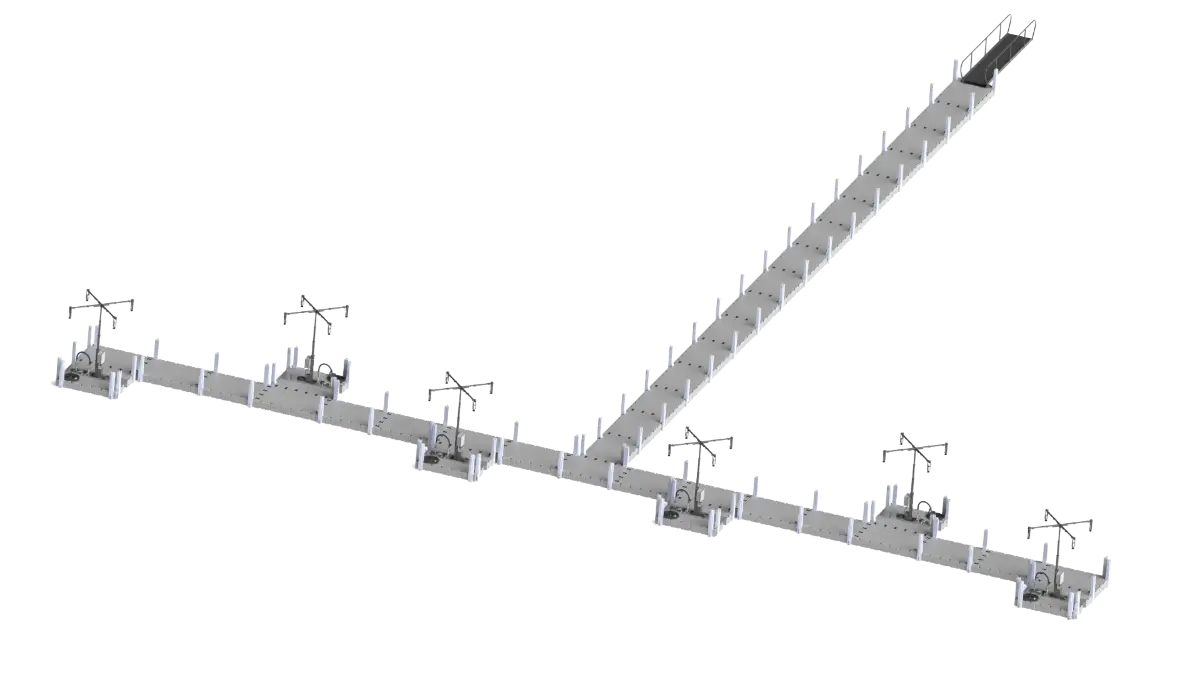
The installation video tells the story clearly. Watch the Gladiator go in — the setup, the positioning, the system coming to life at altitude in one of the most remarkable landscapes on the continent.
Watch the Bryce Canyon Installation Video →
The system was positioned to take full advantage of the high-desert airflow patterns characteristic of the Paunsaugunt Plateau. At altitude, lower air pressure and lower humidity work in the operator’s favor — the driving forces behind enhanced evaporation are stronger here than at sea level. A well-positioned Gladiator in this environment can produce evaporation rates that exceed sea-level performance by a meaningful margin, making the high elevation a feature, not a liability.
Purpose-Built for What Off-the-Shelf Can’t Handle
The core challenge of any national park wastewater application is that you cannot afford failure — in any sense of the word. You cannot afford equipment failure, because there is no convenient service infrastructure. You cannot afford compliance failure, because the regulatory and reputational stakes are immediate. You cannot afford operational surprises, because the park’s primary business is the visitor experience, not wastewater management.
The Gladiator was designed around this reality:
Rotary atomization eliminates pressurized nozzles — the single most common failure point in spray-based evaporation systems. No orifices mean no clogging, no pressure loss, and no service calls chasing plugged heads.
300,000 TDS tolerance means the system handles concentrated water chemistry without corrosion degradation that destroys conventional equipment over time.
Adjustable mast height (4–12 ft) allows the operator to optimize plume projection for site-specific terrain and airflow conditions — critical in a landscape where wind direction and speed shift with canyon topography.
WDC (Weather Droplet Control) compatibility enables automatic shutoff or modulation when wind speeds or direction would create drift conditions — a non-negotiable feature in a protected landscape where overspray is simply not acceptable.
Why National Parks Are the Proving Ground for Industrial Evaporation
There is a reason Evaporation King pursues installations in demanding environments like national parks, closed mine sites, and remote industrial operations. These are the jobs that test the technology — and the team — in ways that controlled demonstrations never can.
If a Gladiator 120 can run reliably at 8,000 feet in a federally protected landscape under full environmental scrutiny, it can run reliably on your pond.
The conditions at Bryce Canyon represent a convergence of the most demanding factors in accelerated evaporation: altitude, regulatory pressure, infrastructure limitations, water table sensitivity, and the public visibility that comes with operating in a national park. A system that performs here performs anywhere.
For operators managing wastewater in environmentally sensitive locations — national parks, protected watersheds, tribal lands, sensitive aquifer zones — the Gladiator represents a proven, compliant, low-maintenance path to volume reduction without discharge. No trucking. No disposal well. No groundwater risk. Wastewater Solved.™
The Results: What Accelerated Evaporation Delivers in a National Park Setting
Zero Liquid Discharge
No water leaves the site as liquid. Volume reduces through evaporation — continuously, compliantly, and without a single discharge event that could trigger regulatory scrutiny.
No Civil Construction Required
The Gladiator went in without pond expansion, liner upgrades, or infrastructure overhaul. Quick deployment in a landscape where heavy construction is simply not on the table.
Minimal Footprint, Maximum Performance
National park installations demand discretion. The Gladiator’s compact footprint and self-contained design mean it operates without dominating the landscape or requiring dedicated support infrastructure.
Operational Simplicity
No complex moving parts. No sensitive electronics exposed to harsh conditions. Automated controls — including auto-shutoff — mean the system runs without demanding constant operator attention. In a park environment where wastewater management competes with a hundred other operational priorities, that simplicity is the difference between a system that performs and one that creates new problems.
See It for Yourself
The Bryce Canyon installation isn’t just a case study — it’s a demonstration. When the setting is one of the most photographed landscapes in the United States and the regulatory environment is one of the most demanding in the country, the video speaks for itself.
Watch the Full Bryce Canyon Installation Video →
If you’re managing wastewater in an environmentally sensitive location — a national park, a protected watershed, a remote site with limited infrastructure, or any location where discharge is not an option — we want to talk.
Talk to an Engineer →
(720) 263-2517
Get a Free Weather Analysis for Your Site →