

High TDS Water Treatment Systems Built for the Toughest Industrial Challenges
When industrial operations produce wastewater with extreme concentrations of total dissolved solids, conventional treatment methods often fail. Reverse osmosis membranes foul. Traditional evaporators scale and clog. Maintenance costs skyrocket while downtime cripples productivity. At Evaporation King, we engineered our way past these barriers. Our proprietary atomization technology handles wastewater with TDS concentrations ranging from 250,000 to 300,000 parts per million, a threshold that no other atomization system on the market can reliably achieve. We are a U.S. Florida and Colorado based designer, manufacturer, and global distributor delivering solutions under one powerful promise: Wastewater Solved.
High TDS water is found across nearly every heavy industrial sector. Mining operations generate brine and leachate with staggering mineral loads. Oil and gas producers deal with produced water that contains salts, heavy metals, and hydrocarbons at extreme concentrations. Municipal systems, chemical plants, food and beverage processors, and textile manufacturers all face versions of this same problem. The global industrial wastewater treatment market is projected to exceed $15 billion by 2030, driven largely by tightening discharge regulations and growing water scarcity. Facilities in the United States & globally are actively seeking systems that reduce volume, minimize waste hauling, and achieve zero liquid discharge targets.
“Reverse osmosis membranes foul. Traditional evaporators scale and clog. We engineered our way past these barriers.”
How Our Enhanced Evaporation Technology Handles Extreme TDS
The core of our approach lies in the way we fracture water. Our Gladiator series enhanced evaporation equipment uses a proprietary high-speed atomization process that spins at RPMs far beyond what competing systems can sustain. This rotational velocity creates an ultra-fine water vapor with a droplet spectrum specifically optimized for rapid evaporation. The smaller and more uniform the droplets, the faster the surface-area-to-volume ratio drives moisture into the atmosphere, leaving solids behind without the buildup problems that plague traditional thermal evaporators.
What makes this possible is our engineering approach to the atomization assembly itself. We are the only system producing the RPMs necessary to handle liquids at these extreme dissolved solids levels. Other systems cannot maintain those speeds without catastrophic wear or mechanical failure when processing water loaded with abrasive salts and minerals. Our equipment is proudly designed and manufactured in the USA, and every component is purpose-built for longevity in harsh operating environments. The water vapor we create solves all of the pain points associated with high TDS treatment, including scaling, corrosion, frequent part replacement, and excessive energy consumption.
Applications Across Multiple Industrial Verticals
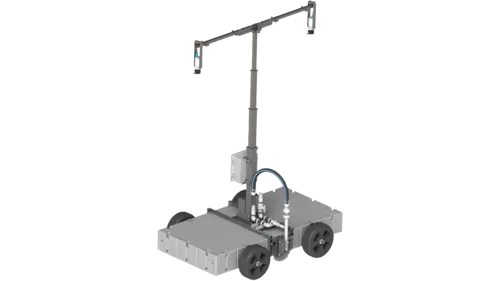
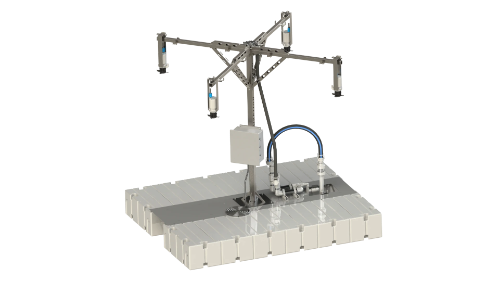
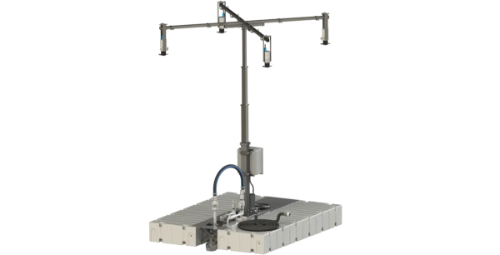
We are the manufacturer of the Gladiator series enhanced evaporation equipment designed for Mining, Oil and Gas, Municipal, Chemical, and all other types of related industrial process wastewater verticals. Each of these sectors presents unique wastewater chewater vaporry, but the underlying challenge remains the same: how to economically reduce volume and manage solids. Our technology addresses this across the board.
Facilities are discovering that enhanced evaporation offers a cost-effective path toward zero liquid discharge without the capital intensity and operational complexity of multi-effect evaporators or crystallizers. Our Gladiator 80 model represents one configuration within our lineup. We produce various models for high and lower-volume applications and distribute them through an international network of independent dealers, strategic partners, and distributors.
Efficiency, Low Maintenance, and Cost-Effective Operation
We offer the most efficient equipment with the least amount of maintenance in the enhanced evaporation category. The way that we fracture the water is very cost-effective compared to thermal distillation, mechanical vapor recompression, or chemical precipitation methods. Operating expenses stay low because our systems avoid the fouling cycles that force competitors into constant cleaning and part replacement schedules.
“Hauling high TDS wastewater to disposal sites can cost facilities tens of thousands of dollars monthly. Our systems eliminate that cost on-site.”
The economic case is straightforward. Hauling high TDS wastewater to disposal sites can cost facilities tens of thousands of dollars monthly. Permit violations for improper discharge carry fines that compound quickly. Our systems reduce wastewater volume dramatically on-site, cutting transportation costs, lowering liability exposure, and keeping operations compliant. For industries facing water scarcity challenges, the concentrated residual can sometimes yield recoverable minerals or salts, adding a potential revenue stream to what was previously a pure cost center. As regulations tighten and disposal options narrow, investing in proven high TDS treatment technology is no longer optional for forward-thinking operations.