
What Wastewater Evaporation Equipment Actually Does
Wastewater evaporation equipment reduces the volume of liquid waste by converting water into vapor and releasing it into the atmosphere. Instead of hauling contaminated water off-site, pumping it into deep injection wells, or storing it indefinitely in lined ponds, operators use evaporation to remove the water fraction directly at the point of generation. What remains is a concentrated residual with a far smaller footprint, which lowers disposal costs and reduces regulatory exposure.
At Evaporation King, we design and manufacture equipment that addresses the hardest part of this task: handling wastewater with extreme total dissolved solids concentrations. Many systems on the market fail when they encounter brines and process streams loaded with salts, hydrocarbons, and suspended material. Our Gladiator series is engineered to process water with dissolved solids concentrations between 250,000 and 300,000 TDS, a range that fouls, clogs, or destroys conventional treatment equipment. This tolerance is the difference between a system that works in a laboratory and one that survives in a working industrial facility.
How the Atomization Technology Works
The core of our approach is mechanical atomization. Our equipment spins wastewater through precision-engineered components at very high rotational speeds. This action fractures the liquid into microscopic droplets with a carefully controlled droplet spectrum. The finer and more uniform the droplets, the greater the total surface area exposed to the surrounding air. Increased surface area means faster evaporation, because water leaves the liquid phase most readily at the boundary between water and air.
We are the only atomization system that can reach the RPMs we operate at while still handling these difficult liquids. That combination matters. Many systems can spin fast on clean water but seize or degrade when fed high-solids brine. Our droplet spectra can handle the highest dissolved solids ranges in the industry. The mist that we create solves the pain points that make other methods expensive and unreliable. The way we fracture the water is very cost-effective, because the process relies heavily on ambient wind and heat rather than burning fuel to boil water. Environmental energy does much of the work, which keeps operating costs low.
Once the droplets leave the atomizer, natural wind currents and ambient heat carry evaporation to completion. This is why site conditions and weather matter, and why our equipment integrates droplet control features that let operators adjust output based on wind, humidity, and temperature. The goal is always the same: maximize evaporation while keeping the vapor within the intended footprint of the site.
Key Benefits and Advantages
Operators evaluating evaporation equipment usually ask the same practical questions. Will it clog on my water? What will it cost to run? How much maintenance will it demand? We built the Gladiator series with direct answers to each of these concerns. We offer the most efficient equipment with the least amount of maintenance, which lowers the total cost of ownership over the full operational life of the system.
- Extreme TDS tolerance: processing wastewater with dissolved solids concentrations up to 300,000 without fouling or premature failure.
- Superior atomization performance: optimized droplet spectra produced at RPMs no competing system can match on difficult liquids.
- Low operating cost: leveraging ambient wind and heat rather than fuel-intensive boiling, with typical costs under a dollar per thousand gallons on electric units.
- Minimal maintenance: fewer moving failure points and reduced downtime, keeping operational budgets predictable.
- Scalability: configurations for both low-volume and high-volume applications, from a single well to a large facility array.
- American made: equipment proudly designed and manufactured in the USA, supported by a network of dealers and partners worldwide.
Each of these advantages ties back to a single measurable outcome: less liquid to manage and less money spent managing it. When an operator can eliminate trucking fees, avoid disposal well dependency, and skip civil construction for new holding ponds, the equipment often pays for itself in well under a year. That economic reality is what drives adoption across industries with very different waste chemistries.
Industries and Applications
Wastewater evaporation equipment serves a broad range of sectors because nearly every industrial process generates liquid waste that must be managed. Evaporation King LLC is a U.S. Florida, Arizona, and Colorado based designer, manufacturer, and global distributor of a proprietary line of evaporation equipment for the Mining, Energy, Food and Beverage, Bio and Pharma, Textile, and Waste Management industries. The Gladiator series was developed specifically to serve Mining, Oil and Gas, Municipal, Chemical, and all other related industrial process wastewater verticals.
Mining operations use our equipment to reduce the volume of process water and tailings pond runoff, often at remote sites where hauling is impractical. Oil and gas producers rely on it to manage produced water and flowback, especially in basins where deep well injection capacity is shrinking due to seismicity concerns. Landfill operators use it to shrink leachate volumes that would otherwise require costly off-site treatment. Chemical manufacturers apply it to concentrated process streams that resist conventional treatment. Food and beverage plants, textile mills, and pharmaceutical facilities all generate wash water and process effluent that benefits from on-site volume reduction.
Municipal facilities and wastewater treatment plants also deploy evaporation to manage residuals and lagoon volumes. In every case, the value proposition is consistent: process the water where it is generated, avoid moving heavy liquid over the road, and reduce the residual to the smallest possible volume. We distribute factory direct and through an international network of independent dealers, strategic partners, and distributors, so operators in the United States & globally and beyond can access equipment and support wherever they operate.
The Gladiator Product Lineup
Every Gladiator model shares the same proprietary atomization technology and the same 300,000-plus TDS tolerance. The primary difference between models is throughput. Matching the system to your pond volume and daily inflow is the key to sizing correctly, and our team helps operators make that match. The lineup spans off-grid solar-powered units through high-capacity industrial arrays.
- Gladiator 60S: a 60 GPM solar-powered system rated for 300,000-plus TDS, designed for remote and off-grid sites with zero grid dependency and zero fuel cost.
- Gladiator 80: an 80 GPM high-efficiency electric unit for sites with grid access, delivering maximum throughput within a minimal footprint at low operating cost.
- Gladiator 120: a 120 GPM electric system built for large-scale operations, offering high volume without compromising TDS tolerance or efficiency.
- Gladiator 720: a 720 GPM industrial-grade system engineered for the largest wastewater volumes, where scale and power are the priority.
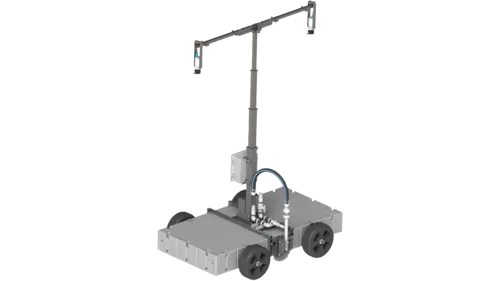
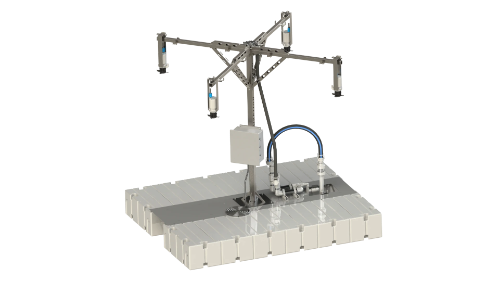
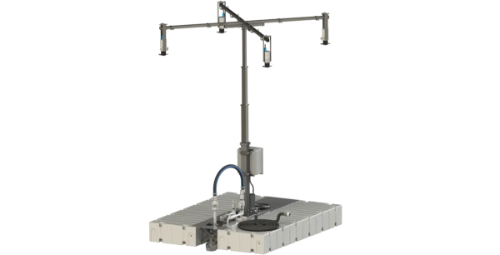
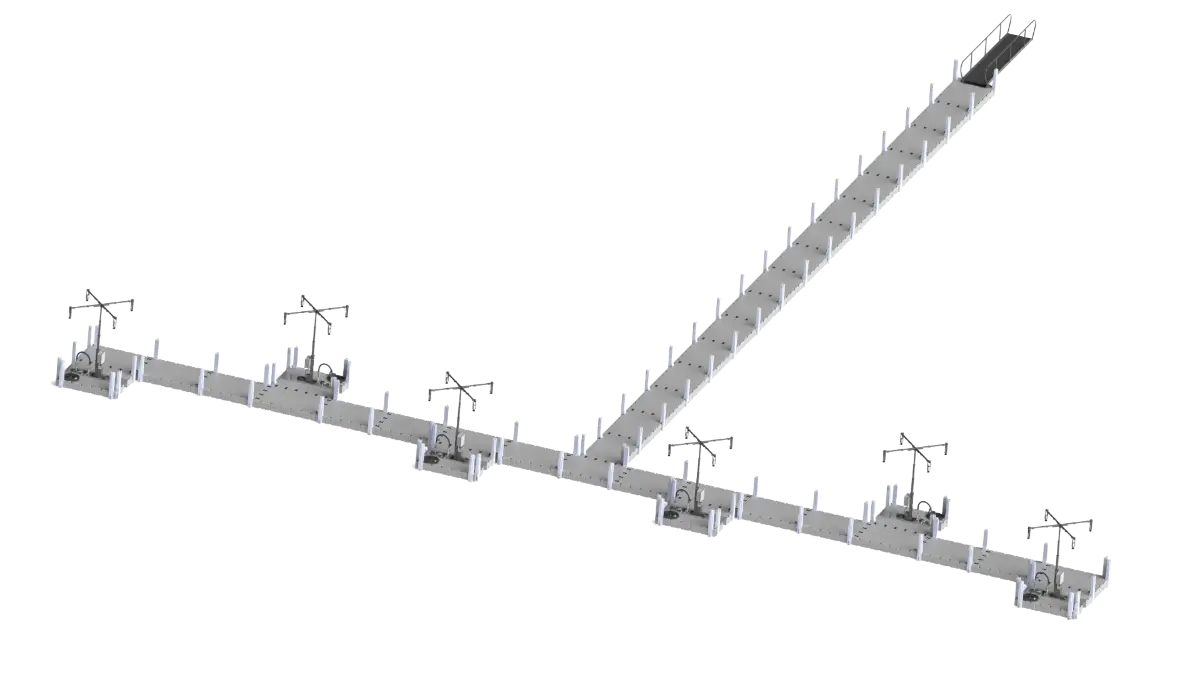
The 60S stands out as the only system rated to run entirely on solar power while still handling the full 300,000 TDS range, which makes it ideal for locations without grid infrastructure. The 80 is a strong entry point for commercial operations. The 120 suits most operators who need reliable high-volume processing. The 720 serves facilities with the heaviest loads. Many configurations are trailer-mounted for rapid deployment, feature adjustable masts, auto-shutoff protection, built-in walkways, and modular stacking so multiple units can work in concert on large ponds.
Comparing Evaporation to Hauling and Disposal
The economics of enhanced evaporation become clear when compared against traditional disposal. Hauling and deep-well injection carry recurring per-barrel or per-gallon fees that never stop as long as water keeps flowing. Trucking costs climb with fuel prices and driver shortages, and injection wells face growing regulatory limits. In contrast, evaporation equipment carries a one-time capital cost followed by low ongoing operating expense, with no hauling fees after purchase and no disposal well required.
There is also no civil construction required to add new holding capacity, because you are removing water rather than storing more of it. Typical payback periods run under twelve months for many operations, and after that the savings continue for the life of the equipment. Reduced truck traffic also lowers safety risk and environmental liability at the site. These factors together explain why operators facing rising disposal costs turn to on-site evaporation as a permanent solution rather than a temporary workaround.
Why Evaporation King
Choosing wastewater evaporation equipment is a long-term decision that affects operating budgets, compliance posture, and site logistics for years. We built the Gladiator series to remove the uncertainty from that decision. Our equipment handles the highest dissolved solids in the industry, runs at low cost, demands little maintenance, and is designed and manufactured in the USA. We support both high and lower-volume applications and distribute globally, so operators everywhere have access to dependable equipment and knowledgeable support.
Not all wastewater can be economically recycled or discharged, and hypersaline brines with extreme TDS often cannot meet reuse standards at any reasonable cost. Enhanced evaporation fills that gap by permanently reducing volume where other methods fall short. If you are weighing how to manage a difficult waste stream, our engineers can help you size the right system for your conditions. Wastewater Solved.