Managing excess water—whether from industrial processes, stormwater, or produced water—has always been a balancing act between compliance, cost, and operational efficiency. Traditionally, companies have relied on trucking and off-site disposal or expanding evaporation ponds to keep up with volumes. But both approaches come with escalating costs, logistical challenges, and long-term liabilities.
Mechanical evaporation is changing that equation.
At Evaporation King, our Gladiator units are engineered to deliver a faster, more cost-effective path to water volume reduction—while dramatically improving return on investment (ROI).
The True Cost of Traditional Water Management
1. Trucking and Disposal: A Recurring Expense That Never Ends
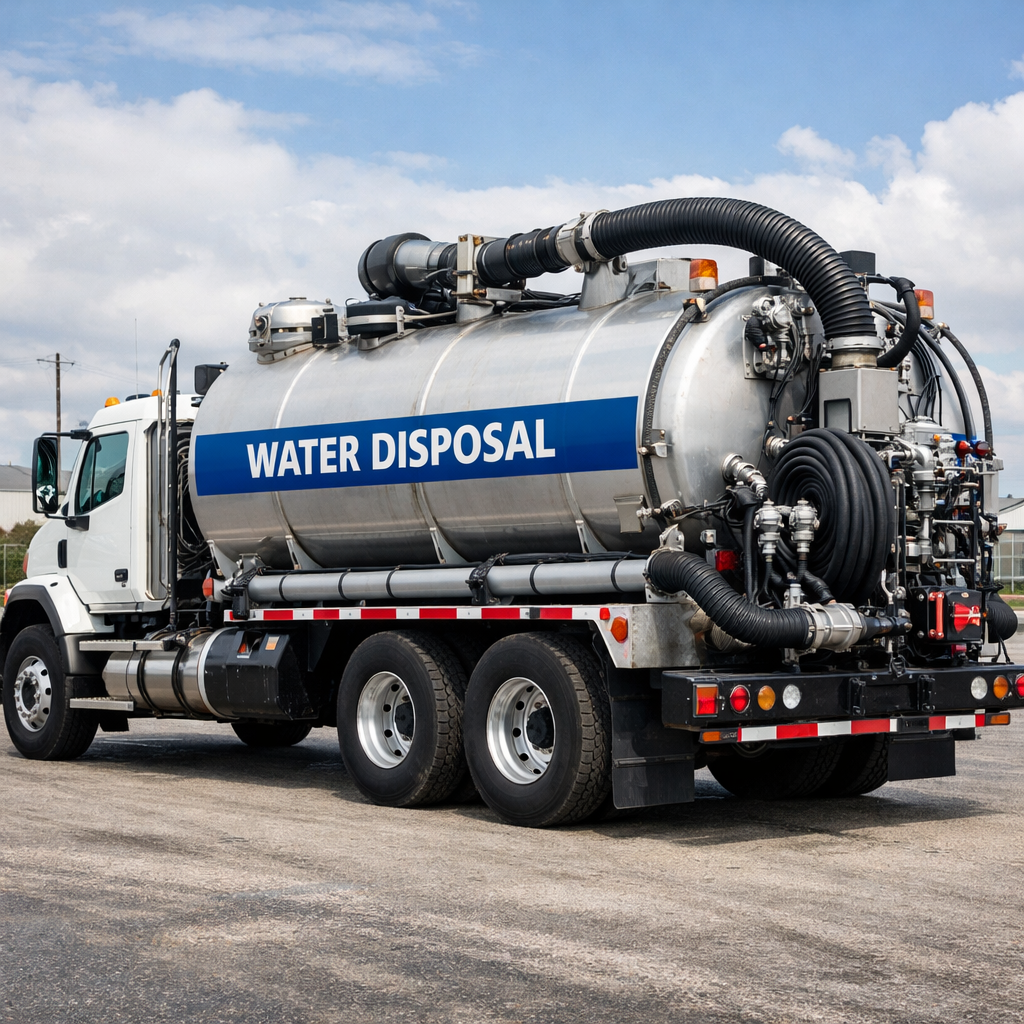
Trucking water off-site may seem like a straightforward solution, but it quickly becomes one of the most expensive line items in your operation.
- Per-barrel or per-gallon fees add up fast
- Fuel, labor, and equipment costs fluctuate
- Regulatory and disposal fees continue to rise
- Operational risk increases with every mile traveled
Most importantly, trucking is a perpetual cost—you pay for every gallon, every time. There’s no long-term asset being built, only ongoing expense.
2. Expanding Evaporation Ponds: Capital Heavy with Hidden Risks
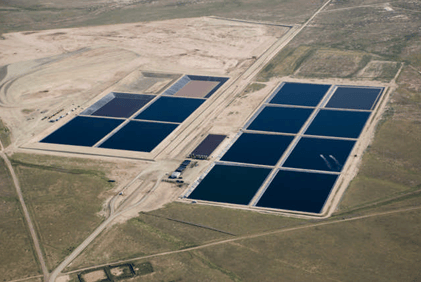
Buying additional land and constructing new ponds introduces a different set of challenges:
- High upfront capital for land acquisition and construction
- Permitting and environmental compliance delays
- Increased liability from leaks, overflows, or wildlife exposure
- Slow evaporation rates dependent on weather and surface area
Even after the investment, pond performance is limited by physics—natural evaporation is relatively slow and inconsistent.
Mechanical Evaporation: Turning Water into Opportunity
Evaporation King Gladiator units take a fundamentally different approach.
Instead of relying solely on passive evaporation, our systems enhance natural evaporation by engineering droplet size and maximizing surface area.
How It Works
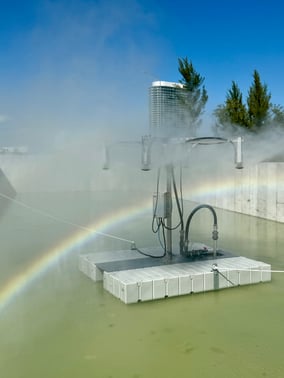
Gladiator units atomize water into billions of ultra-fine micron-sized droplets. These droplets—many comparable in size to or smaller than a human hair—dramatically increase the total surface area exposed to air.
This process:
- Accelerates evaporation rates exponentially
- Allows water to evaporate mid-air before reaching the ground
- Reduces reliance on large surface areas like ponds
In simple terms:
More surface area = faster evaporation = less water to manage
ROI Breakdown: Why Gladiator Units Win
1. Immediate Reduction in Operating Costs
By deploying mechanical evaporation:
- Trucking volumes drop significantly—or are eliminated entirely
- Disposal fees shrink in direct proportion to volume reduction
- Labor and logistics costs decrease
Many operators see rapid payback periods, often within months, not years.
2. Minimized Capital Expenditures
Instead of purchasing more land and building new ponds:
- Gladiator units utilize your existing footprint
- Deployment is fast and scalable
- Capital is directed toward productive equipment—not idle land
This shifts spending from static infrastructure to active performance assets.
3. Increased Operational Flexibility
Unlike ponds or trucking schedules, mechanical evaporation gives you control:
- Adjust droplet size and flow rates in real time
- Adapt to weather conditions for optimal performance
- Maintain continuous operation where other systems stall
This flexibility ensures consistent water management regardless of changing conditions.
4. Reduced Environmental and Regulatory Risk
Mechanical evaporation helps mitigate:
- Overflow risks from pond capacity limits
- Spills and incidents during transport
- Long-term environmental liabilities tied to land use
With less water stored and transported, your risk profile improves significantly.
A Smarter Long-Term Strategy
When comparing options side by side:
|
Approach |
Cost Structure |
Scalability |
Risk |
ROI |
|
Trucking & Disposal |
Ongoing, variable |
Limited |
High |
Low |
|
Pond Expansion |
High upfront + slow return |
Land-dependent |
Moderate–High |
Moderate |
|
Mechanical Evaporation |
Upfront + rapid payback |
Highly scalable |
Lower |
High |
Mechanical evaporation isn’t just an alternative—it’s a strategic upgrade.
The Bottom Line
Evaporation King’s Gladiator units transform water management from a cost center into a controllable, ROI-driven process. By generating billions of micron-sized droplets and maximizing surface area, we unlock the full potential of natural evaporation—faster, smarter, and more efficiently than traditional methods.
If you’re still relying on trucking or expanding ponds, you’re paying more than you need to.
It’s time to evaporate the problem—and the unnecessary costs that come with it.